
The Birds of Kibale National Park
A detailed guide on birds of Kibale National Park. Kibale National Park, located in the western region of Uganda, is renowned not only for its diverse landscapes and rich biodiversity but also for being one of the premier bird watching destinations in Africa. Spanning 766 square kilometers, the park’s varied habitats (ranging from tropical rainforests and grasslands to wetlands) house over 350 species of birds. This makes it an ornithologist’s paradise. This article explores the avian diversity found in Kibale National Park. It also highlights notable species, the best bird watching practices, and the role of bird conservation in the region.
Habitat Diversity Influencing Bird Life in Kibale National Park
Kibale National Park’s richly varied environments contribute immensely to its avian diversity. Different bird species inhabit specific areas of the park, and the interplay of ecology and avifauna creates a vibrant ecosystem.
The dense rainforests, dominated by towering trees and thick undergrowth, provide critical habitats for many bird species, including those that prefer tree canopies and understories. The park features vast swampy areas and rivers that attract various waterfowl and migratory birds. These wetlands support a unique ecological niche that provides food and breeding grounds. Encounters with birds in open grasslands yield sightings of species adapted to these habitats, including various grassland specialists that thrive in the park’s meadows. Kibale experiences distinct wet and dry seasons, affecting bird behavior and visibility. Many migrant birds visit during the wet season, adding to the diversity of species observed.
Notable Bird Species in Kibale National Park
Kibale National Park is home to numerous bird species, many of which are endemic or unique to the region. Here are some key highlights:
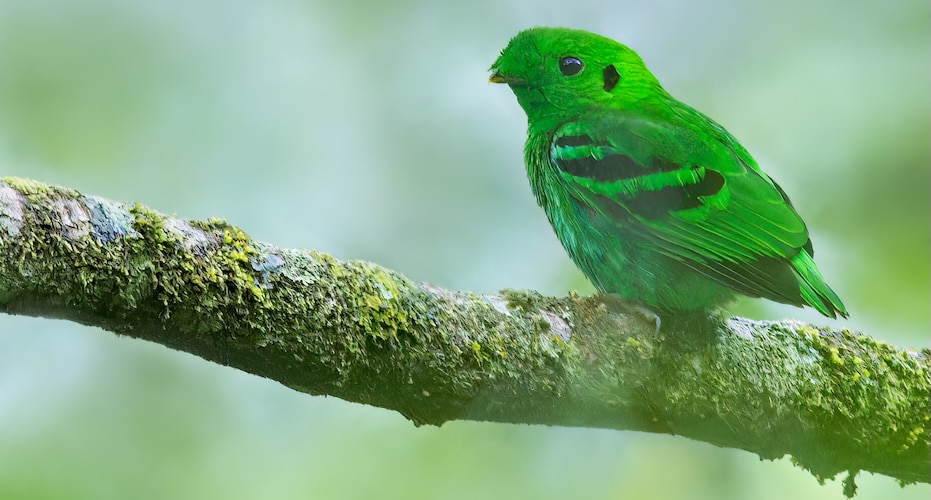
African Green Broadbill (Pseudocalyptomena graueri). This beautifully plumed bird is striking due to its vibrant green coloration and is among the most sought-after species by birdwatchers. The African Green Broadbill prefers dense, humid forests where it forages for insects and fruits.
Great Blue Turaco (Tauraco malacolophus). Easily recognizable by its brilliant blue and green plumage, the Great Blue Turaco is medium-sized and often spotted gliding between tree branches. Its unique call resonates throughout the forest, adding a musical quality to the environment.
Yellow-billed Turaco (Tauraco macrorhynchus). Vibrant and strikingly colored, the Yellow-billed Turaco is predominantly green with bright yellow markings. Its preference for the middle layers of the forest makes it a delightful find while exploring Kibale’s rich flora.
Black-crowned Tchagra (Tchagra senegalus). With its distinctive black crown and striking appearance, the Black-crowned Tchagra is often found in open woodlands and forest edges. Its beautiful calls are a common sound in the park, announcing its presence.
African Pied Wagtail (Motacilla aguimp). This charming bird is often seen flitting near water bodies, searching for insects and small invertebrates. It is easily distinguished by its black and white plumage and characteristic wagging tail, making it a delightful sight for visitors.
White-tailed Blue Flycatcher (Cyornis concretus). This attractive bird, adorned in blue and orange, is known for its melodious song. It is often spotted flitting about in the undergrowth as it hunts for insects, providing excellent opportunities for birders.
More Species of Kibale
Blue-headed Coucal (Centropus monachus). With its distinctive blue head and long tail, the Blue-headed Coucal is frequently found in the park’s swamp areas. Its deep calls echo through the forests, making it a notable sound in the avian chorus.
Purple-breasted Sunbird (Cinnyris bifasciatus). A small, brightly colored bird, the Purple-breasted Sunbird is often seen hovering near flowers. Its vibrant plumage and energetic behavior make it a favorite among birdwatchers and photographers.
Scarlet-chested Sunbird (Chalcomitra senegalensis). Known for its impressive iridescent red and green plumage, the Scarlet-chested Sunbird can often be found in flowering trees. This species is a true gem of Kibale, attracting birdwatchers from far and wide.
What is the Best time for bird watching in Kibale National Park?
Bird watching in Kibale National Park can be enjoyed year-round, but certain times of the year are more favorable for spotting specific species.
Dry Season (December to February). The dry months are generally the best time for bird watching. Many species are easier to spot as they congregate near water sources and are less hidden by foliage.
Wet Season (March to November). Although birding can be more challenging during the wet season due to dense vegetation, this is also when many migratory birds arrive. The variety of species and the vibrant color of newly blooming plants can make for an exciting experience.
Early Morning and Late Afternoon. Bird activity tends to peak during the early morning and late afternoon. This is when most birds are engaged in foraging and singing, providing the best opportunities for sighting.
Bird watching Tips for Visitors
To maximize the experience of bird watching in Kibale National Park, consider the following tips:
Hire a Guide: Engaging a knowledgeable local guide can greatly enhance your bird watching experience. Guides can provide insights into bird behavior, habitats, and help identify species.
Bring Binoculars and a Field Guide: A good pair of binoculars is essential for bird watching, allowing you to observe birds from a distance without disturbing them. Having a field guide can also assist in identifying different species.
Wear Appropriate Clothing: Dress comfortably in breathable clothing and wear neutral colors that blend into the environment. Sturdy walking shoes are essential, especially for hikes through varied terrain.
Practice Patience: Birdwatching often requires patience and quiet observation. Take time to sit in one spot and listen for bird calls, as this can lead to remarkable encounters.
Be Respectful of Wildlife: Always respect the natural habitats of the birds and follow park guidelines. Ensure that your presence does not disturb bird activities.
Conservation Challenges for Birds in Kibale National Park
Though Kibale National Park is a protected area, several challenges threaten the avian populations and overall biodiversity.
Habitat Loss: Agricultural expansion and deforestation pose significant threats to the habitats of many bird species. Encroachment on natural areas disrupts ecosystems and leads to diminishing bird populations.
Climate Change: Changes in climate patterns can affect food supplies and nesting behaviors. As temperatures rise and weather patterns shift, some species may struggle to survive in their usual habitats.
Invasive Species: Non-native plants and animals can disrupt local ecosystems, often outcompeting native species for resources. This can lead to declines in bird populations dependent on specific habitats.
Pollution: Agricultural run-off and pollution can degrade water quality in wetlands, negatively affecting both aquatic and terrestrial bird life. This requires ongoing monitoring and proactive conservation measures.
Community Conservation Efforts
Local communities play a vital role in bird conservation in Kibale National Park. Community-based initiatives have emerged to engage locals in conservation efforts while benefiting from sustainable tourism practices. Educational programs aimed at local communities highlight the importance of biodiversity and the role of birds in ecosystem health. Such initiatives encourage individuals to take part in conservation efforts.
Community-run lodges and tour companies allow locals to benefit directly from tourism, creating an incentive to protect the natural environment. This approach supports both conservation and local livelihoods. Partnerships between conservation organizations and local communities help to monitor bird populations and habitats. Involving community members in data collection fosters ownership of conservation successes.
Ready to go birding in Kibale?
Do you want to see the birds of Kibale National Park? The park stands out as a remarkable sanctuary for both bird enthusiasts and the avian species it protects. With its diverse habitats and an incredible array of bird species, Kibale offers unique opportunities for exploration and discovery. Understanding the park’s birds and their habitats is crucial for conservation efforts, and responsible birdwatching can play a vital role in protecting this rich avian paradise.
Birds are not simply inhabitants of Kibale. They are symbolic of the park’s health and vitality. As conservation efforts continue, the future of Kibale’s birds will depend on collaborative actions that engage both local communities and visitors in the shared goal of preserving this extraordinary ecosystem for generations to come.



Leave A Comment